
Ultimate Guide to Restroom Trailer Rentals
The Ultimate Guide to Restroom Trailer Rentals: Elevating Your Event
Have you ever been to a stunning outdoor wedding, dressed in your Sunday best, only to find that the "facilities" were a cramped, plastic box smelling of blue chemicals and regret? It’s a vibe-killer. Whether you're planning a corporate retreat in the White Mountains or a 200-person gala in your backyard, the bathroom situation can make or break the guest experience. In 2026, the trend has shifted: people don't just want a place to go; they want a sanctuary that mirrors the quality of the event itself.
Why Standard Porta-Potties Just Don’t Cut It Anymore
Let’s be honest: the standard porta-potty is the "utility player" of the sanitation world. It’s great for a construction site or a 5K race, but it’s hardly the place where a bridesmaid wants to adjust her gown or a CEO wants to check their tie.
When you choose a restroom trailer, you aren't just renting a toilet; you're investing in your guests' comfort. Imagine the difference between a dark, cramped stall and a bright, climate-controlled suite with running water and a vanity mirror. It’s like comparing a budget motel to a boutique hotel. High-end events demand high-end solutions, and in the modern event landscape, a luxury trailer has become the gold standard for anyone looking to maintain an atmosphere of sophistication and care.
What Exactly is a Luxury Restroom Trailer?
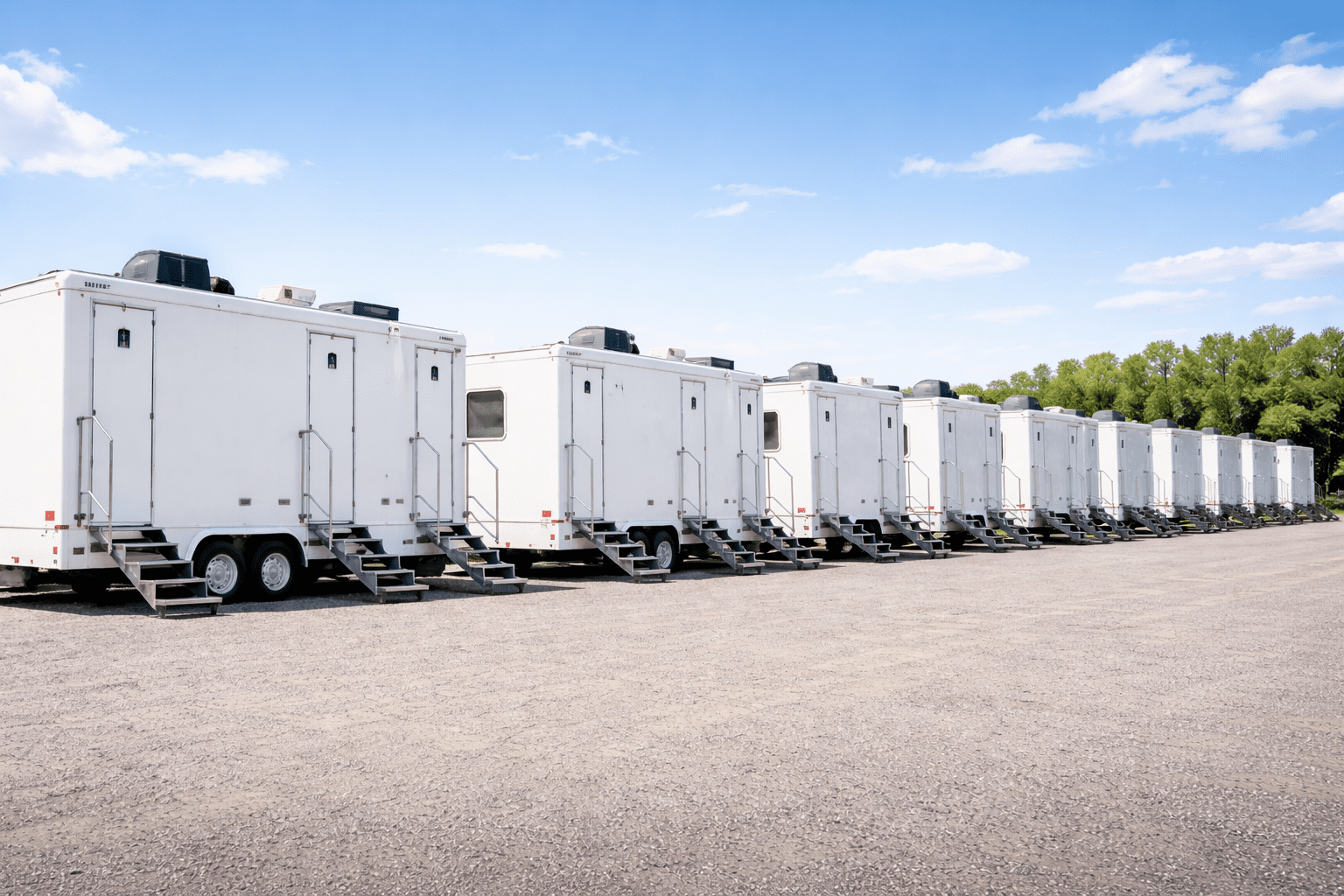
If you haven't stepped inside a modern restroom trailer lately, prepare to be surprised. These aren't just "upgraded" toilets; they are mobile architectural units designed to mimic the bathrooms you’d find in a high-end restaurant or a country club.
Key Features That Redefine Mobile Sanitation
What sets these units apart is the attention to detail. We’re talking about porcelain flush toilets, stainless steel or vessel sinks, and solid surface countertops like granite or quartz. You’ll often find:
Climate Control: Fully adjustable A/C and heating to keep guests comfortable regardless of the New England humidity or an October chill.
High-End Lighting: LED sconces and vanity mirrors that make for great "bathroom selfies."
Sound Systems: Integrated Bluetooth speakers to keep the party music (or calming jazz) flowing.
Fresh Water Systems: No more hand sanitizer pumps—these units offer hot and cold running water.
“A restroom trailer is the silent hero of a successful event. If people notice it, it’s usually because they’re impressed by how nice it is, rather than how much they want to leave.”
Types of Restroom Trailers for Every Occasion
One size definitely does not fit all in the world of mobile restrooms. The trailer you’d need for a 30-person backyard birthday party is vastly different from what’s required for a massive town festival.
Compact 2-Stall Units for Intimate Gatherings
The 2-stall trailer is the "sweet spot" for small weddings and private parties (think 50 to 100 guests). Typically divided into a "Men’s" and "Women’s" side, these units are compact enough to fit into a driveway or a tight corner of a garden. They provide all the luxury features without the massive footprint of a larger rig.
High-Capacity 8-10 Stall Trailers for Festivals
When the guest list climbs into the hundreds or thousands, you need a powerhouse. An 8-stall or 10-stall unit is designed for high throughput. These are the workhorses of music festivals and large-scale corporate events, capable of handling 500+ guests while maintaining a clean, orderly environment. They often feature multiple urinals and stalls to keep the lines moving.
ADA-Compliant Trailers: Prioritizing Accessibility
Inclusivity is non-negotiable. ADA-compliant trailers are specially designed with hydraulic systems that lower the entire unit to the ground, allowing for a gentle ramp entry. These units feature extra-wide doors, spacious interiors for wheelchair maneuverability, and sturdy grab bars. Providing an ADA option shows your guests that you’ve truly thought of everyone’s needs.
The Logistics: Power, Water, and Placement
You can’t just drop a trailer anywhere and expect it to work like magic. There is some "behind-the-scenes" wizardry required to ensure the water flows and the lights stay on. If you're working with a professional coordinator, they'll handle this, but it's good for you to know the basics.
Understanding Electrical Needs: Amps and Circuits
Most restroom trailers require at least one dedicated 20-amp, 120-volt circuit. Larger units or those running heavy A/C might need two or three. The keyword here is dedicated. If you try to run the trailer on the same circuit as the DJ’s speakers and the catering ovens, you’re going to be resetting breakers all night. If shore power isn't available, you’ll need a quiet, event-grade generator—which usually adds about $150–$300 to your rental cost.
Fresh Water vs. Onboard Tanks
Ideally, you have access to a standard garden hose spigot within 100 feet of the trailer. This provides a continuous flow of water. If you're in the middle of a remote field, don't panic. Many trailers come with onboard fresh water tanks (often 100–200 gallons). Your rental company will fill it before the event, and it should last for the duration of a standard 4-to-8-hour gathering.
The "Where": Ground Requirements and Turning Radius
These trailers are heavy. We’re talking several thousand pounds. They need to be placed on firm, level ground. Asphalt, gravel, or packed dirt are ideal. If you want it on grass, make sure the ground isn't soft or muddy, or you might find the trailer sinking or leaving deep ruts. Also, remember the "swing wide" rule: a truck hauling a 24-foot trailer needs a lot of room to maneuver. Always check for low-hanging branches or narrow gates before delivery day!
The Bottom Line: What Does a Rental Cost in 2026?
Budgeting is the least fun part of event planning, but it's the most necessary. In 2026, prices have stabilized, but they still reflect the "premium" nature of the service.
| Trailer Type | Weekend Rate | Best For |
|---|---|---|
| 2-Stall Luxury | $1,800 – $2,200 | Small weddings (50-100 guests) |
| 4-Stall Deluxe | $2,000 – $2,700 | Mid-sized events (100-250 guests) |
| 8-10 Stall Commercial | $3,500 – $4,500 | Large festivals (300-500+ guests) |
| ADA + 2 Unit | $2,800 – $3,400 | Inclusive events |
Note: These prices typically include delivery, setup, and pickup, but distance fees (usually $3–$4 per mile) and generator rentals can add to the total.
The "Alcohol Factor" and Other Capacity Secrets
Here is a pro-tip most people miss: The "Alcohol Factor." If you are hosting an open bar, guest usage of the restrooms will increase by roughly 20–25%. That 2-stall trailer that was "just enough" for 100 people suddenly feels very crowded once the craft beer starts flowing.
When estimating your needs, always round up. If you have 140 guests, don't try to squeeze them into a unit rated for 150—go for the next size up. It’s better to have an empty stall than a 15-minute wait that keeps people away from the dance floor.
Seasonal Challenges: Winterizing Your Trailer in New England
Planning a winter wedding in New Hampshire or a holiday party in Boston? You can still use a restroom trailer, but it requires a Winterization Package. This includes heated hoses, insulated waste tanks, and internal heaters to prevent the plumbing from freezing.
Without these precautions, a 15°F night will turn your luxury trailer into an expensive ice sculpture. Always ask your provider about their "cold weather" protocols if your event falls between October and April.
Conclusion: Making the Right Move for Your Guests
At the end of the day, your event is a reflection of your hospitality. While restroom trailers might not be the most glamorous line item on your planning checklist, they are arguably one of the most important. By providing a clean, comfortable, and upscale environment, you’re telling your guests that their well-being matters. From the quiet hum of the A/C to the convenience of a flushing toilet in the middle of a forest, these units provide the "home-away-from-home" comfort that turns a good event into a great one.
Frequently Asked Questions (FAQs)
Do restroom trailers smell like standard porta-potties? Absolutely not. Because they use flushing toilets and sealed waste tanks—much like an RV or a home—there is no open waste exposed to the air, virtually eliminating odors.
How much space do I need for a trailer? A typical 2-stall trailer is about 12–16 feet long, while larger units can reach 25–30 feet. You should allow for at least 10 feet of width and 12 feet of height clearance.
Do I need to provide a water source? It’s preferred! A standard garden hose connection within 100 feet is ideal. However, if no water is available, many trailers have onboard tanks that can be pre-filled for an extra fee.
Can the trailer be used in the winter? Yes, but it requires a "winterization" kit. This includes heaters for the interior and specialized equipment to keep the pipes and tanks from freezing in sub-zero temperatures.
How many people can a 2-stall trailer handle? Generally, a 2-stall unit is rated for up to 100–125 guests for an 8-hour event. If you’re serving alcohol or the event lasts longer, you should consider a 3 or 4-stall unit.
Do I need an attendant on-site? For most private events, no. The units are designed to be self-sufficient. However, for large public festivals (500+ people), having an attendant to restock paper products and wipe down counters is highly recommended.
Can I decoratively "hide" the trailer? While most luxury trailers are clean and white, you can easily use potted plants, lattice fencing, or strategic placement behind a tent to make it blend into your event’s aesthetic.